
Before the Clearing
What Delaware's original forest looked and functioned like — and what you're actually seeing when you walk through the woods today

Good evening, Neighbors,
This is the piece that the first week has been building toward. If you followed along with our daily posts — the deforestation timeline, the wolves and cougars, the elms — this is where those threads come together. If you’re joining us for the first time, welcome.
You don’t need to have read anything else to start here, but if you’d like to go deeper, “The Next Clearing” and our daily posts are all available on Facebook and Substack Notes. Today’s piece is free for everyone.
On Friday, paid subscribers will receive the story of the American chestnut — the tree this forest was organized around, and the subject of one of the most remarkable restoration efforts in science.
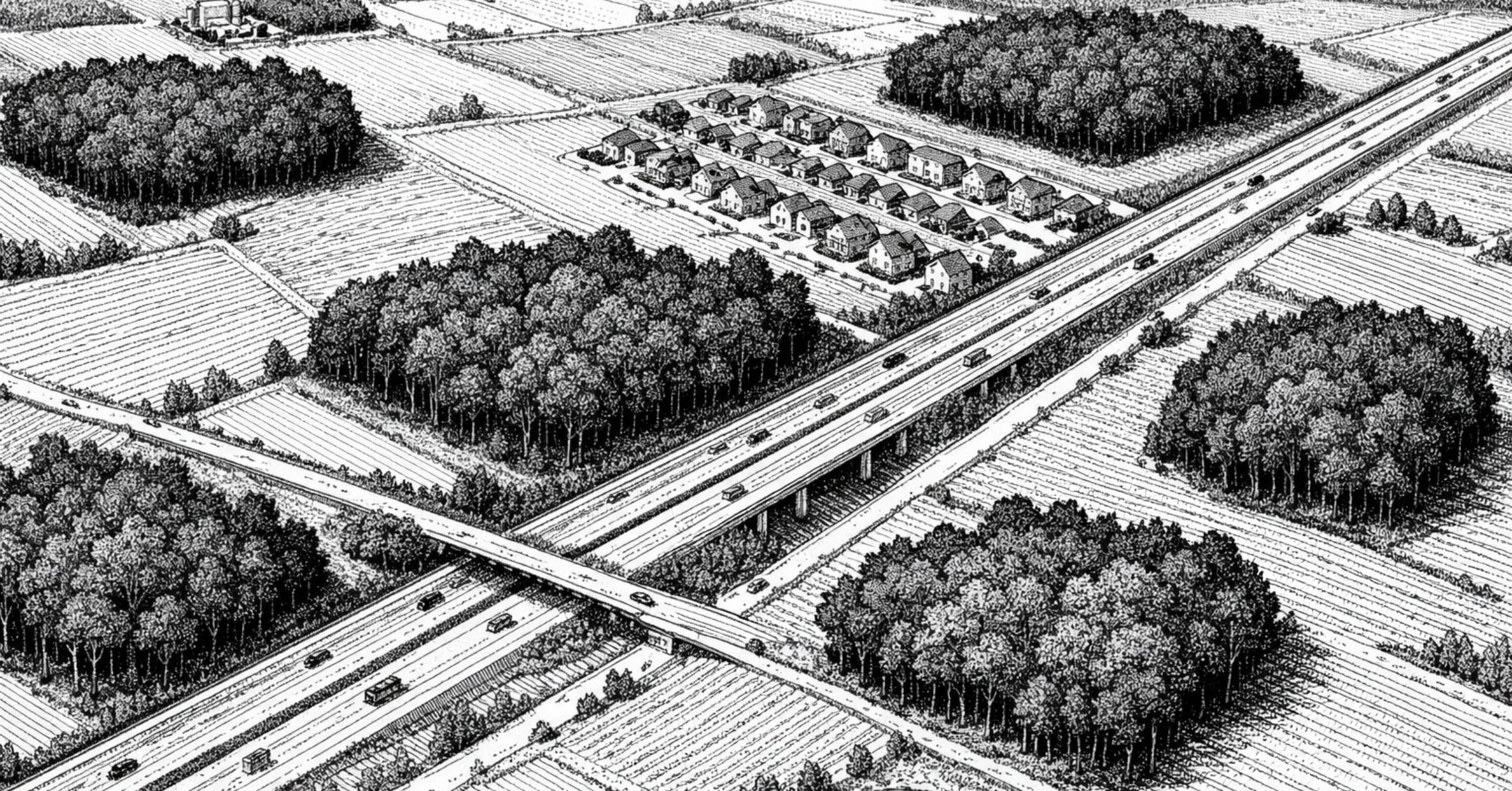
A note on the images in this piece: The original forest scenes in today’s newsletter were generated using AI image tools (ChatGPT) from prompts developed in collaboration with Claude (Anthropic). Because no photographs or archival images of Delaware’s pre-colonial forest exist, these images are informed reconstructions — based on publicly available ecological data, historical accounts, and scientific literature about the composition and structure of eastern old-growth forests. They are not intended to represent specific sites. The pen-and-ink illustrations of contemporary scenes were produced using the same process. The Delaware Project discloses its use of AI in its visual and editorial workflows as part of its editorial policy.
Gregory S. Layton, The Delaware Project
Stand in any woodlot in Delaware today, and you are standing in an echo. The trees around you are real, but they are not what was here. What was here was something else entirely — older, deeper, more alive than most of us have ever seen or can easily imagine.
Before the first European ax bit into a Delaware white oak, forest covered roughly ninety percent of what we now call the First State. More than a million acres. Not a uniform wall of green but a living architecture — layered, structured, and vast, shaped by thousands of years of coevolution between trees, animals, fire, water, and the people who lived inside it.
The canopy was the ceiling of a cathedral that stretched from the Piedmont hills to the coastal plain, and the dominant species were trees we have either lost or reduced to mere shadows of their former selves.
The trees that held the sky up
American chestnut was the keystone. One in every four hardwood trees in the eastern forest was a chestnut — immense, straight-trunked trees that could grow a hundred feet tall and ten feet in diameter. No other species produced food so reliably. The nuts fell in such quantities every autumn that they carpeted the forest floor, feeding deer, bear, turkey, squirrels, and the Lenape who gathered them as a staple. The wood was rot-resistant, light, and easy to split — ideal for fencing, building, and fuel. The chestnut was the tree around which the forest was organized.
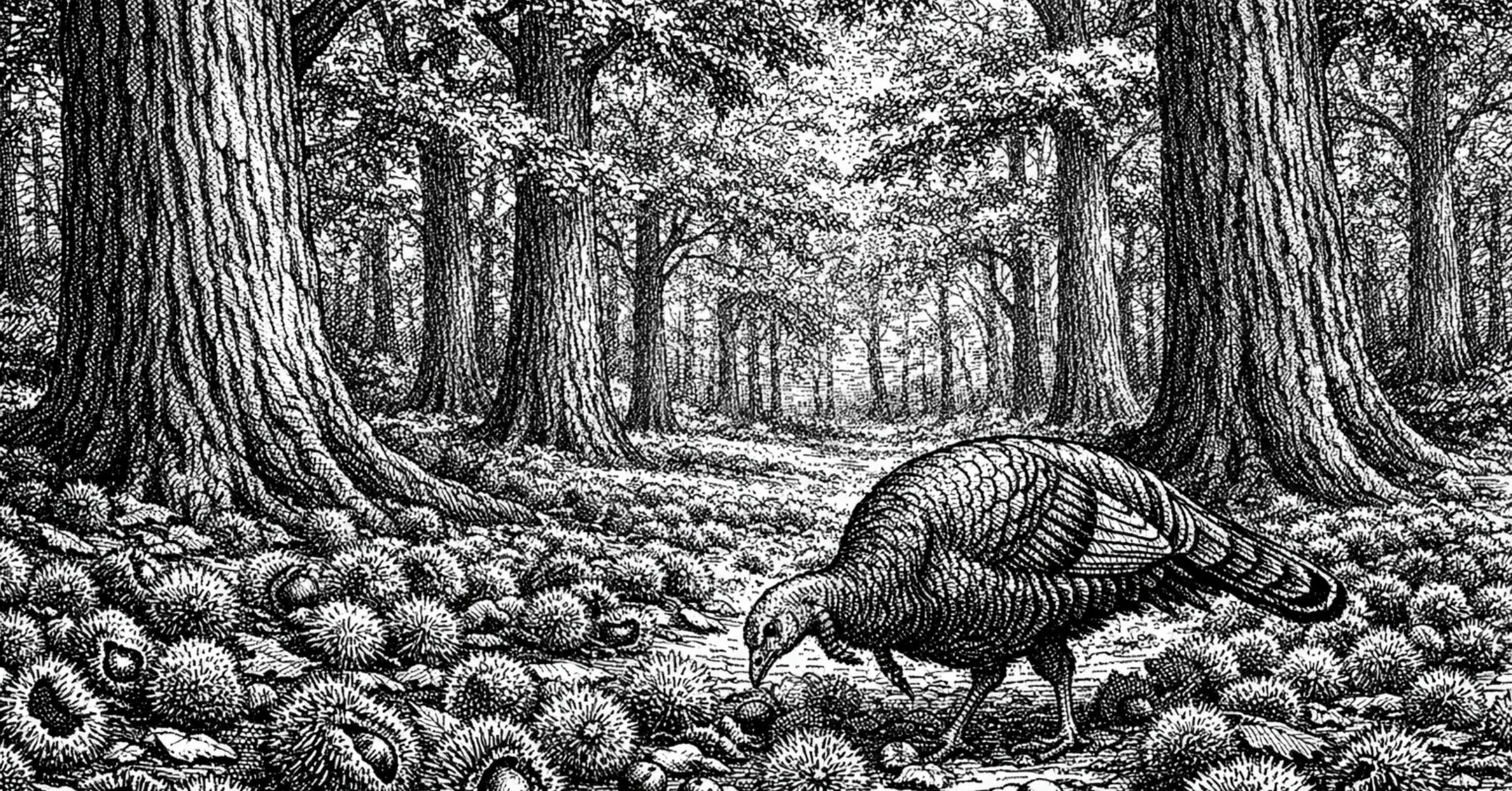
White oak stood beside it — slower growing, longer lived, producing acorns that fed the same web of animals across centuries. Tulip poplar shot up fast in gaps and clearings, its straight trunks prized for dugout canoes. Hickories contributed their own mast. American beech held the lower slopes and stream edges, its smooth gray bark and dense shade creating a distinct understory world beneath it. And American elm — tall, vase-shaped, graceful — anchored the stream banks and wet bottomlands, its arching canopy shading the water that brook trout and freshwater mussels needed to survive.
These were not decorative trees. They were infrastructure.
The layers beneath
An old-growth forest is not just tall trees. It is a vertical community — five or six layers deep, each one supporting a different set of species that depend on the others.
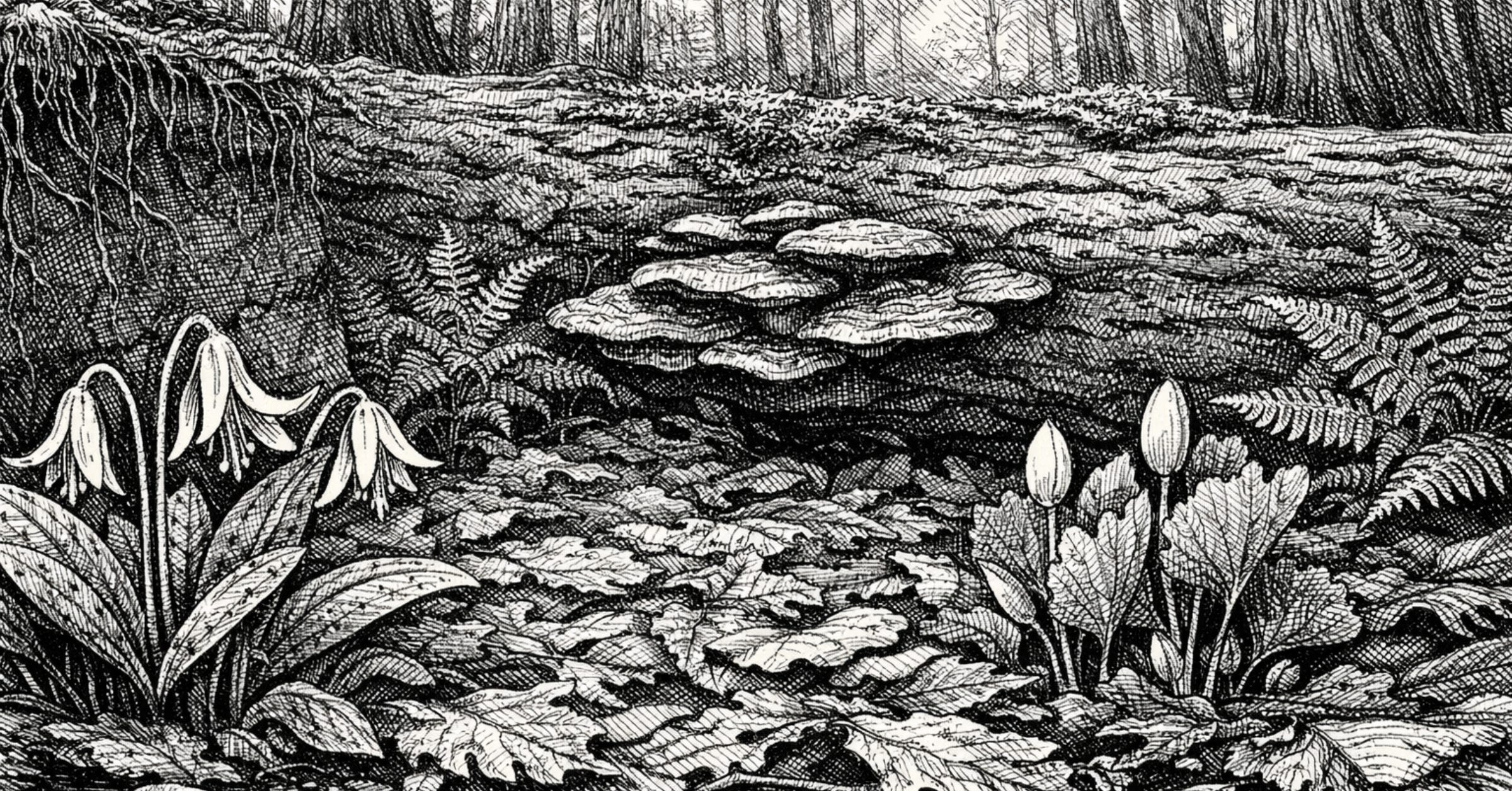
Beneath the overstory canopy, a secondary layer of smaller trees — dogwood, ironwood, sassafras, serviceberry — filled the middle space, producing fruit and flowers at heights that songbirds and pollinators could reach. Below that, a shrub layer of spicebush, witch hazel, and native viburnums created dense cover for ground-nesting birds and small mammals. The herbaceous layer — ferns, wildflowers, native grasses — covered the forest floor in a carpet that shifted with the seasons: trout lily and bloodroot in early spring before the canopy leafed out, then shade-tolerant species through summer. And beneath all of it, the forest floor itself: inches of accumulated leaf litter, decaying wood, fungal networks threading through the soil, cycling nutrients back into the roots of the trees overhead.
Every layer fed the next. Remove one, and the others shift. Remove several, and the system simplifies into something that looks like a forest but doesn’t function like one.
The fire that kept it open
The forest the colonists encountered was not a wilderness. It was a managed landscape.
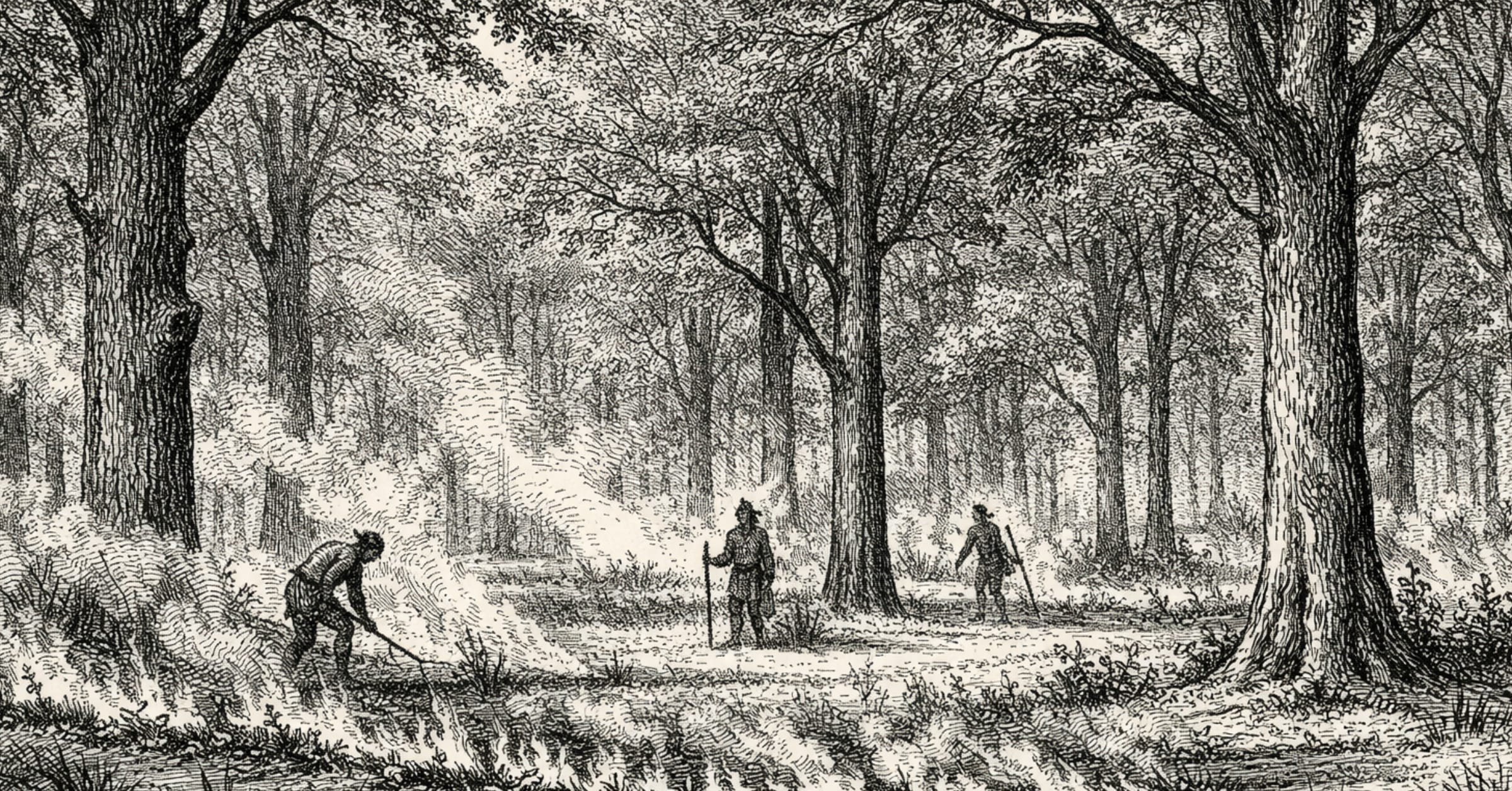
The Lenape and the Nanticoke used fire deliberately — burning the understory in regular cycles to clear brush, encourage new growth, improve hunting, and maintain the open, park-like structure that European observers described with such admiration in their earliest accounts. These were not wildfires. They were a land management practice refined over centuries, and they shaped the forest as profoundly as the climate or the soil.
The burns kept the understory open, allowing sunlight to reach the forest floor and encouraging the growth of grasses, berry-producing shrubs, and young mast trees. They reduced the fuel load that could otherwise feed catastrophic crown fires. They created edge habitat — the borders between forest and clearing where ecological diversity is highest. The forest the colonists saw and coveted was, in significant part, the product of indigenous stewardship. When the Lenape were displaced, the fires stopped, and the forest began to change even before the axes arrived.
What the forest did
A forest this size and this old was not just habitat. It was the operating system of the landscape.
It held the water. Root networks and deep leaf litter absorbed rainfall and released it slowly into streams, maintaining base flows through summer droughts and reducing the catastrophic flooding that now follows every heavy rain on cleared land. It filtered the water — every drop that reached a stream had passed through layers of soil and organic matter that stripped sediment, absorbed nutrients, and cooled it to the temperatures required by cold-water species.
It built the soil. Centuries of leaf fall and decomposition created topsoil measured in feet, not inches — dark, rich, fungally active soil that stored carbon, retained moisture. They supported the agricultural productivity that the colonists would strip-mine for generations.
It moderated the climate. A million acres of transpiring canopy cooled the air, humidified it, and created microclimates within the forest that buffered temperature extremes. The difference between standing inside an old-growth forest and standing in an adjacent clearing can be fifteen degrees on a summer afternoon. Scale that difference across a million acres, and you are describing a regional cooling system that no longer exists.
And it connected everything. A bear could walk from the Pennsylvania line to the coast without leaving the canopy. A migrating warbler could find continuous habitat from the ridgeline to the tidal marsh. Freshwater mussels in every stream filtered the water and hosted the larvae of the shad that swam upstream each spring. The forest was not a collection of trees. It was a network, and every node supported every other node.
Press Play!
The Delaware Project visualizes 400 years of change in 40 seconds.
What stands in its place
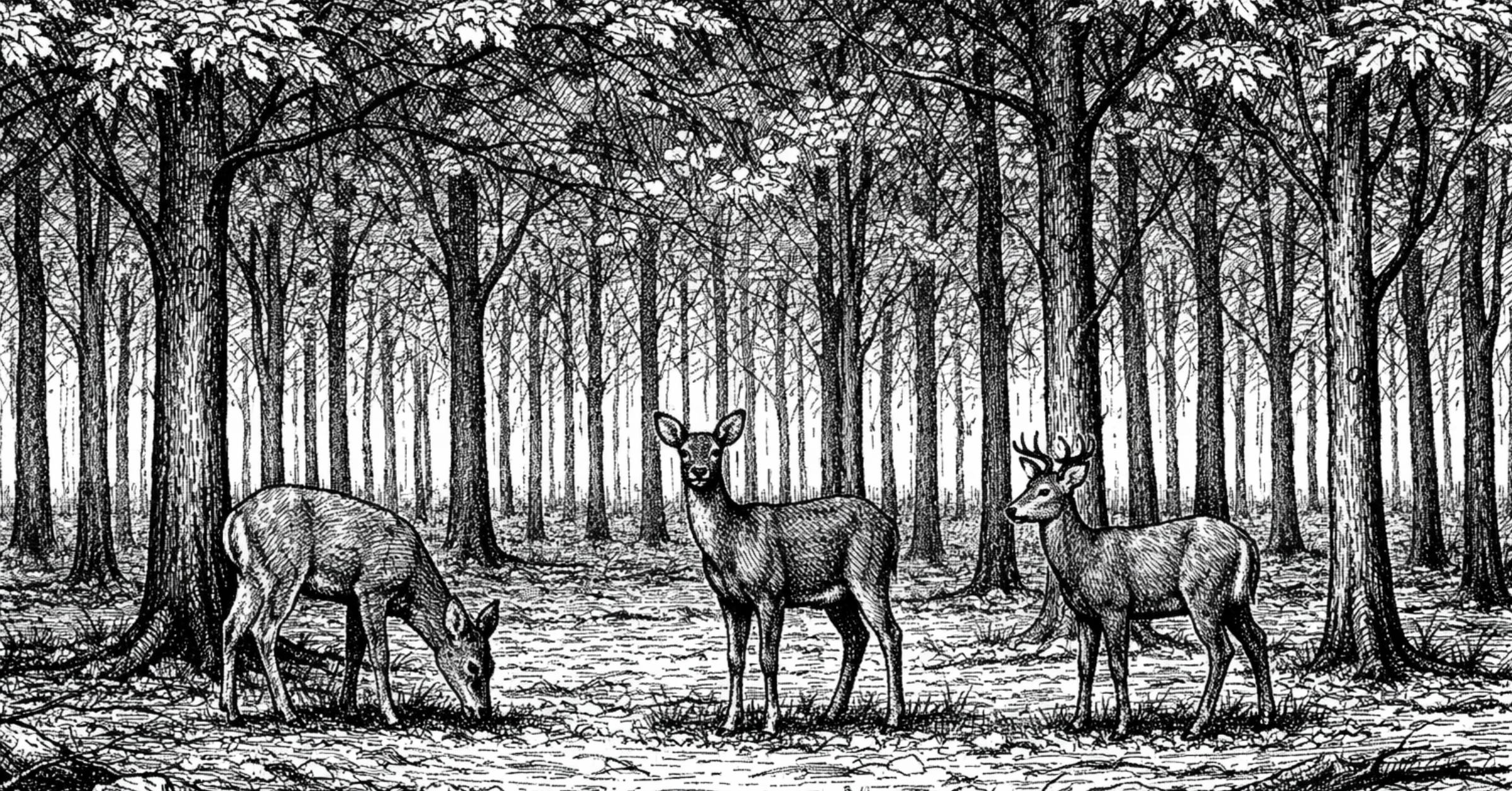
Today, forest covers roughly thirty percent of Delaware — and almost none of it is old growth. What grew back after the clearing is younger, simpler, and less diverse than what was cut down. The chestnuts are gone, eliminated by blight in the early twentieth century. The elms are gone, killed by Dutch elm disease. The understory, ungrazed by fire and unregulated by apex predators that were extirpated two centuries ago, is either overbrowsed by deer or choked with invasive species — multiflora rose, Japanese stiltgrass, mile-a-minute vine — that fill the gaps the native shrubs can no longer hold.
The layered structure is largely absent. In many Delaware woodlots, you can see the canopy, and you can see the ground, and there is almost nothing in between. That missing middle is where the songbirds nested, where the pollinators foraged, where the next generation of canopy trees was supposed to be growing. The deer eat it before it gets above their reach.
The soil is thinner. The streams are warmer. The floods are worse. The carbon that was stored in centuries of accumulated forest floor has been released. And most of us, walking through a second-growth woodlot on a Sunday afternoon, think we are seeing a forest.
We are seeing the aftermath.
Why it matters now
The ecologist Daniel Pauly coined a term for this: shifting baseline syndrome. Each generation accepts the degraded condition it inherits as normal, because it has no memory of what came before. The baseline shifts downward, and no one notices because no one remembers the original.
Delaware’s forest is a textbook case. What we call “wooded” today would have been unrecognizable to the Lenape — not because the trees are different species (though some are), but because the structure, the function, the depth of the system has been simplified almost beyond recognition. We protect what we have, and we should. But we should also know that what we have is a fraction of what was here, and that fraction is still losing ground.
This is not a call to return to some imagined past. The landscape has changed, the climate is changing, and the million-acre forest is not returning to its original form. But understanding what was here — what the forest did, how it worked, what it held — changes the way you see what’s left. It raises the standard. It makes “good enough” harder to accept.
On Friday, we’ll look at the species that best represents what the original forest lost: the American chestnut — one in every four trees, gone in a generation, and the subject of one of the most ambitious genetic restoration efforts in history.
The forest that was here is not coming back. But something can grow in its place — if we understand what we’re reaching for.
This is the third installment of The Delaware Project’s Ecological Explorations series. On Wednesday, we published “The Next Clearing.” On Friday, paid subscribers received “The Fish That Fed Us,” the story of the American shad. Both are still available. Follow along daily on Notes and Facebook — new pieces every day this month.
Gregory S. Layton is the founder of The Delaware Project. Drop him a line at GregoryLayton@PM.ME to win a year of complete access to The Delaware Project content.