
Common Ground, If We Can Keep It
A reply to Michael Swartz on the Wetlands Stewardship Act — what Senate Bill 9 actually touches, and what's actually at stake.

By Gregory S. Layton, The Delaware Project
A few days ago, Michael Swartz published a piece called “Common ground?” — an open-handed response to my recent writing on the Wetlands Stewardship Act, Senate Bill 9. He did something I want to reciprocate rather than score off: he reached across a divide that usually goes uncrossed in Delaware’s small political world. I take the gesture at face value. But before we can find whatever common ground is actually there, we have to agree on what we’re standing on — and much of what he raises, reasonable as it is, isn’t wetlands.
So let me clear the table.
This isn’t a contest between Right and Left. The functions a wetland performs — holding floodwater, filtering what reaches our wells, buffering the storms that are getting worse, not better — don’t check a party registration. State Sen. Eric Buckson is a sponsor of Senate Bill 9, and the bill was crafted by groups that don’t agree on much else, such as the Home Builders Association of Delaware and the Nature Conservancy. If it reads as a left-wing project, that’s a framing imported from outside the bill, not something in it.
“God knows we don’t need any more regulation. It’s hard enough making a profit today, [but] as a steward of the land, I think this bill is appropriate. Without regulation, there won’t be any wetlands.”
— Sussex County farmer Bobby Horsey, who opposed previous wetlands bills.
Senate Bill 9 isn’t about who runs which blog or what the Governor does and doesn’t post. That’s the inside baseball of our little arena, and it has nothing to do with whether 75,000 acres should sit unprotected.
It isn’t about housing affordability. That’s a real problem, and I’d happily take it up on its own terms another day — but you can build the homes Delaware needs and protect its wetlands, because the two compete for far less of the same ground than the framing suggests. Treating protection as the thing standing between young families and a house is a substitution, not an argument.
SB 9 isn’t about retirees, the sales tax, or “pulling up the ladder.” No one is being kept out of Delaware. The question is narrower than that: where, specifically, we build.
It isn’t about solar panels on farmland or climate mandates. Whatever one thinks of those, they’re a separate fight — and SB 9’s farming exemptions actually protect working agricultural operations, the opposite of the threat he names.
So one of two things is true. Either Michael knew all of this and chose the insinuation anyway — or he didn’t know it, and reached for an evocative photograph in place of the ten minutes of homework the subject asks of anyone who wants to argue about it in public. I would genuinely rather it be the second. Perhaps he simply didn’t know.
And Senate Bill 9 isn’t, finally, about whether Washington overreached. On the venue, Swartz and I may not be far apart: after Sackett, the appropriate answer really is a Dover one. But the federal retreat is the reason we’re here, not a point against acting — roughly 75,000 Delaware acres lost their federal footing, and we’re the only mid-Atlantic state with nothing of our own underneath them.
Set all of that aside, and what remains is a short and honest list of questions worth a real conversation: how much private property the bill actually reaches, what its exemptions do and don’t cover, and whether the regime it sets up is the right one. Those I’m glad to take up — and on the first, I think the answer will reassure him more than he expects.

And on that first question — how much private property this reaches — I’d start where Michael started: with his photograph. It’s the most persuasive thing in his piece, and the most misleading.
What he shows us is a wide, dry, actively farmed field in bloom beneath an open sky, captioned “not exactly wetlands, but ground that could be worth preserving nonetheless.” It’s a lovely image and a clever one. It invites you to imagine the Wetlands Stewardship Act reaching out across open country — that the same hand which guards a marsh might one day close around a cornfield. Not exactly wetlands does the work of a wink: not a wetland, but who’s to say it’s safe?
The trouble is that the photograph answers him. That field is dry upland in active cultivation, and dry upland in cultivation is precisely the land that no wetlands law — not Delaware’s, not Washington’s, not SB 9’s — regulates as a wetland. A wetland isn’t “rural land,” or “open space,” or “ground worth preserving” in the eye of a sympathetic photographer. It’s a specific thing, identified by three physical tests that SB 9 borrows straight from the federal delineation manual: wetland hydrology, hydric soils, and water-loving vegetation. A plowed field flowering in April fails all three. If Michael wanted to show his readers the kind of ground this bill governs, he picked the one frame that shows the opposite.
It’s worth saying plainly what protects farmland, because the lazy assumption — wetlands rule means the government coming for the farm — only survives where nobody checks it. Today, Delaware regulates tidal wetlands and leaves its nontidal acres to the federal government. But federal reach over those acres is narrow and has just gotten narrower: after the Supreme Court’s 2023 Sackett decision, the Clean Water Act covers only wetlands with a continuous surface connection to navigable waters, and the EPA has spent the time since then redrawing its map to cover less. And even at the height of federal reach, working farms were the written-in exception — since 1977, normal, established farming, ranching, and forestry have been exempt from federal wetlands permitting. The plowing and harvesting Michael drove past to take that picture were never the target.
SB 9 carries that protection forward rather than stripping it away. Farming on land worked, or plainly intended for working, within a rolling ten-year window as part of an established, ongoing operation is exempt outright — as is permitted silviculture, as are the agricultural drainage ditches and tax ditches that thread fields exactly like the one in his photo. Those exemptions did not arrive over the farmer’s objection. This bill was built over years, with agricultural, business, environmental, and government people at the same table, and it cleared its Senate committee without a dissenting vote. The farm community helped write the protections he’s worried don’t exist.
So when the caption suggests that the field could be “preserved” out from under its owner, the honest reply is short: not by this bill, and not by the law as it stands. If anything, SB 9 does the farmer a favor — it writes his protection into Delaware code, where his neighbors can see it and defend it, rather than leaving it to the shifting moods of a federal agency three years into redrawing its own boundaries.
Which brings me to the part I’d rather not have to write. None of what I’ve just laid out is obscure. Sackett was a front-page Supreme Court decision. The federal farming exemption has been part of the Clean Water Act since 1977. The bill’s own text spells out its agricultural carve-outs in plain language, and the fact that farmers, builders, and conservation groups built this thing together over years runs through every news account of it. A person genuinely interested in debating wetlands policy — rather than keeping a round of Right-versus-Left going — would have looked these things up first, because that is what it means to engage a subject instead of a side. And having looked them up, the intellectually responsible move is to say so: to tell your readers the farm is already protected, and then make whatever argument you have left. What you do not do, if you’ve done the reading, is open with a flowering cornfield and a caption engineered to walk people toward a conclusion you know to be false.
So one of two things is true. Either Michael knew all of this and chose the insinuation anyway — or he didn’t know it, and reached for an evocative photograph in place of the ten minutes of homework the subject asks of anyone who wants to argue about it in public. I would genuinely rather it be the second. Perhaps he simply didn’t know.
Either way, he knows now. So let’s drop the photograph and have the real conversation — the one about the narrow band of genuine wetlands this bill actually reaches, and why those acres are worth the trouble. The cornfield was never in question.
If I sound certain about what this land is and isn’t, it’s because I’ve known it a long time — and that’s worth a word, because it shapes how I see all of this.
Michael writes about the newcomers — the retirees chasing the beach, the “pastoral venue,” the missing sales tax — and he’s right that they keep coming. He came himself, from Ohio, by way of a job and a preference for our lower taxes. I came by a shorter and stranger road: the fourth-floor maternity ward of the old Milford Memorial Hospital. I’m not a newcomer to the First State. I’m one of the things it made.
I grew up in these fields. I rode my bike along their edges, worked their gardens and their rows, caught fireflies after dark and crayfish in the ditches, and rolled logs at the woods’ edge hunting fishing worms — turning up a cool salamander as often as not. I know what this landscape used to look like, not from a report but from a childhood spent inside it.
And here is what an ordinary morning held back then. A yellow-billed cuckoo slipping through the trees. A kestrel on the power line, reading the field. And bobwhite — not one, but a chorus, calling from every direction at once, a full three hundred and sixty degrees of quail. If you arrived here in the last couple of decades, you may never have heard that, and you’d be forgiven for not knowing it was ever there to hear. The bobwhite is down by roughly 85% across the country, and in Delaware, it has retreated from most of its old range as the fields it needed went to pavement and pesticides. The silence where that chorus used to be isn’t nostalgia. It’s data.
So when Michael writes warmly of the “pastoral venue” people come here to “enjoy” — I think those were close to his words — I’d gently point to the paradox folded inside the sentence. Rural charm is a finite thing, and a good deal of it is spent in the very act of arriving to enjoy it. I don’t say that to pull the ladder up behind me; I would never deny anyone the Delaware that made me. I say it because I may be one of the few people in this argument rooted here long enough to testify to what the ladder used to lead up to. Michael is defending a landscape he loves. I’m defending the fuller version of it — the one he arrived too late to meet, and the one the next arrivals won’t meet at all unless we keep some of it standing.
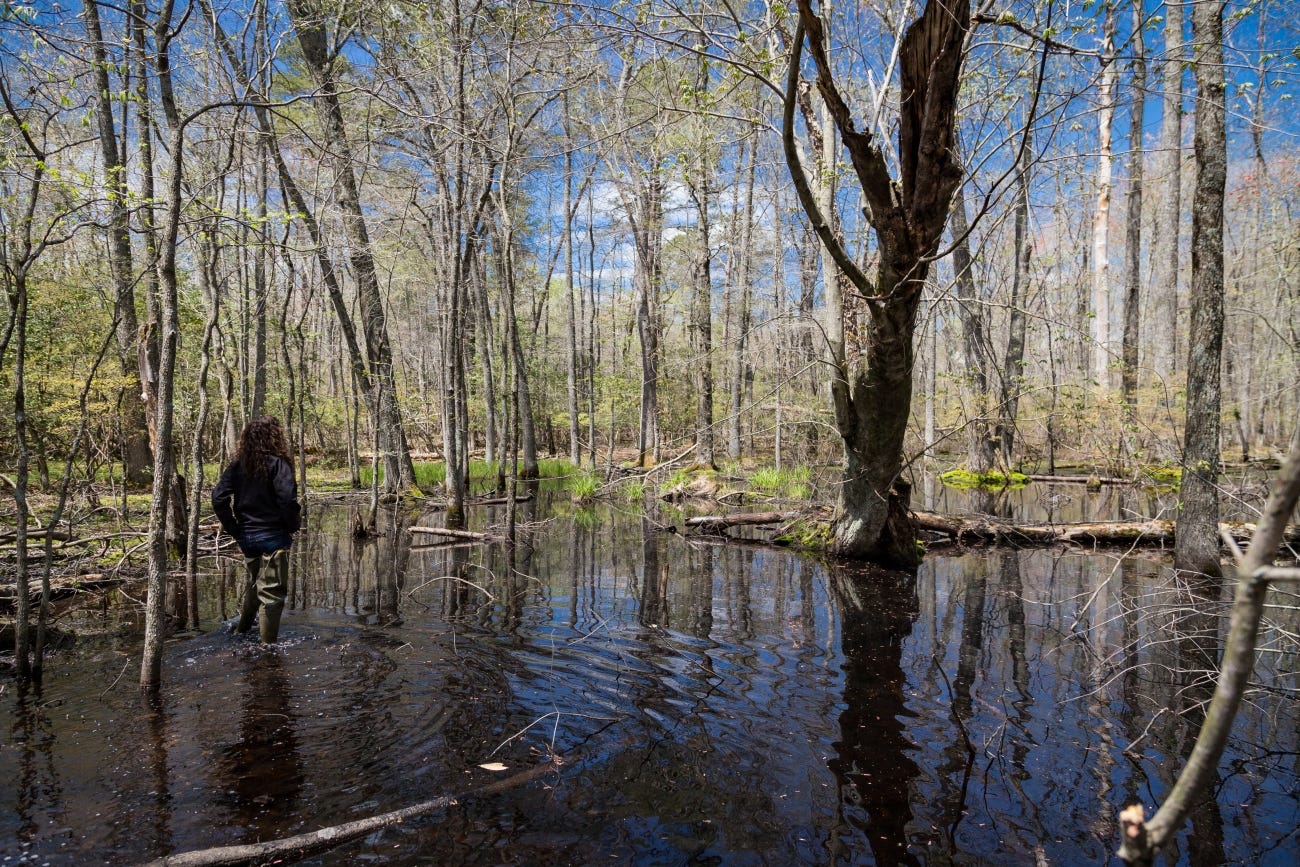
So what, then, is actually in question? Not the cornfield, but the quiet, unglamorous half-acre at its edge — the wet woods, the seasonal pond, the headwater swamp that doesn’t photograph as well as a field at golden hour but does far more work than any of us notice.
Start with the number that explains why this bill exists at all. In 2022, DNREC found that about 30,000 acres of Delaware’s nontidal wetlands had no protection. After Sackett redrew the federal map, that figure climbed to roughly 75,000 acres — freshwater wetlands that, as of this morning, anyone may drain or fill without asking a soul. That is the gap SB 9 fills, and it’s worth being precise about what sits in it.
Here is what a single photograph can’t tell you, and what the bill plainly understands: not all wetlands are equal, and SB 9 doesn’t pretend they are. It sorts them. A screening tool decides which parcels even merit a second look. The genuinely irreplaceable systems — what the bill calls Exceptional Value and Unique wetlands — draw the strongest protection, precisely because they’re ecologically rare, high-functioning, or home to endangered life. The ordinary small stuff gets a fast lane: a landowner with half an acre or less can certify that it isn’t one of the rare types and proceed, and routine low-impact work is covered by general permits. This is not a net thrown over the landscape. It’s triage — the state spends its attention where the stakes are highest and waves the rest through.
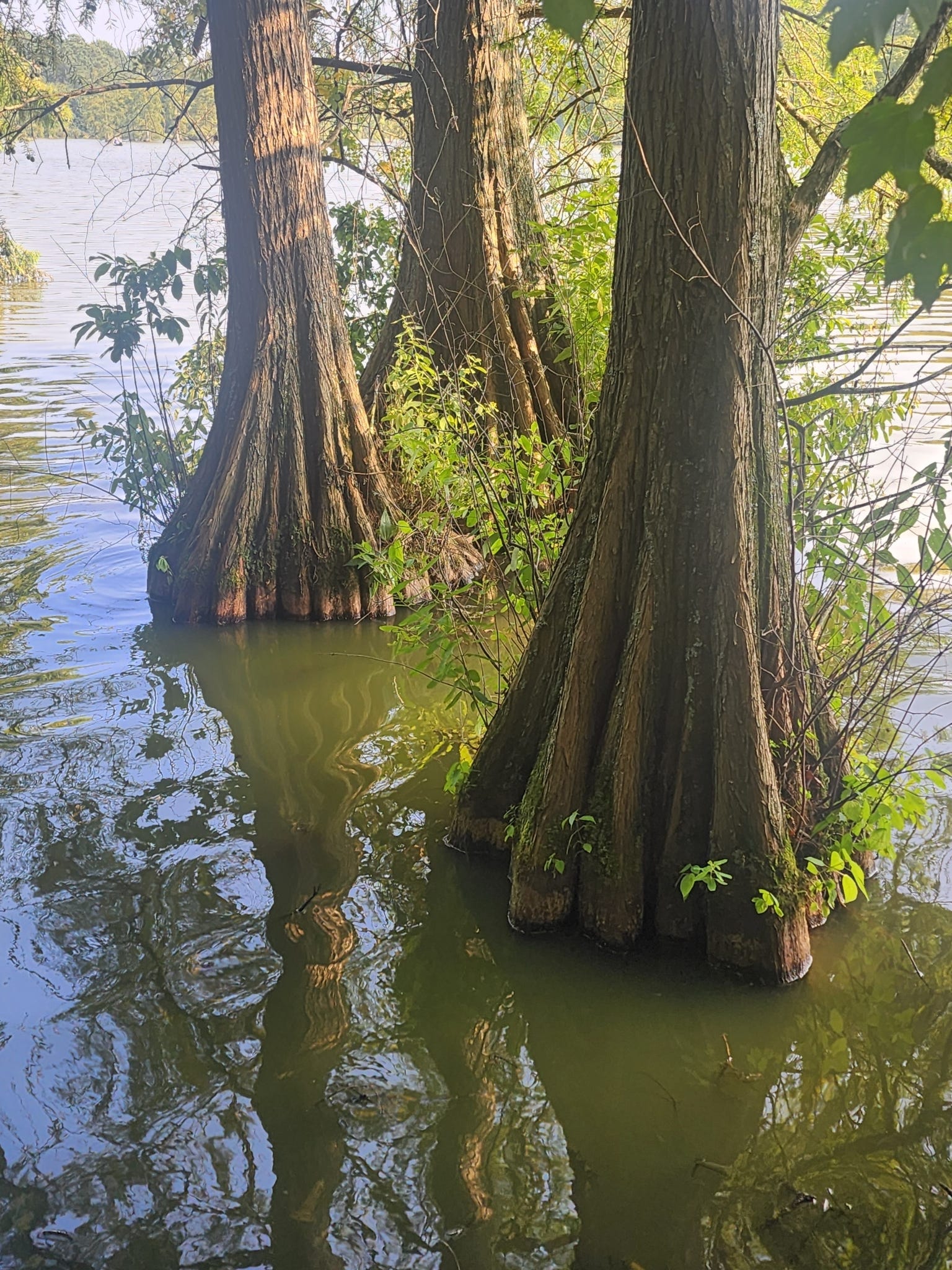
And in cases, the stakes are real. Take the Delmarva bays — the elliptical depression ponds scattered mostly across Kent and lower New Castle, scoured out at the end of the last ice age and some ten thousand years old. They are barely two percent of Delaware’s wetland acreage, and many are already gone. For that sliver of ground they carry a wildly outsized share of our rare life: dozens of plant species rare in this state, several rare in the world, and the Eastern tiger salamander — a foot-long, yellow-blotched animal that DNREC lists as endangered, that spends most of its life underground beneath the coastal-plain forest and emerges on warm rainy nights to breed in pools that hold no fish to eat its young. There is no federal backstop for that pond anymore. There is no market substitute for it either. You cannot build a Delmarva Bay. You can only fail to wreck the ones the ice age left us.
But I won’t rest the case on salamanders, because it doesn’t need them. Wetlands are the cheapest flood-control infrastructure Delaware owns. DNREC’s own people call them sponges: they swallow stormwater and release it slowly, which is exactly what a flat, low, increasingly storm-battered state needs more of, not less. They recharge the groundwater that a great many Sussex and Kent wells draw on for drinking water. They filter nitrogen and sediment from our fields and lawns before they reach the Inland Bays or the Chesapeake. Nearly a quarter of this state — some 296,000 acres — is wetland. It is not a fringe feature of Delaware; it is Delaware, as surely as the cornfields Michael loves. Pave the wrong half-acre, and the water it used to hold doesn’t disappear. It turns up in someone’s basement, someone’s well, or someone’s flood-insurance premium. The very property values he wants to safeguard for the next generation of buyers rest, in part, on the wetlands he’d sooner photograph and drive past.
Michael says he likes cornfields and even the occasional “smells like Delaware.” So do I. But the pond at the back of that farm, the wet woods along the ditch, the swamp the road bends around — that’s the same landscape, the same First State he says he wants to keep. Protecting it isn’t the Left coming for the land. It is conservation in the oldest and most conservative meaning of the word: handing the place on intact. That’s the bill. That’s the half-acre actually in question. And it’s a debate I’m glad to have on the merits — which is all I ever asked for.
Obviously we have a stylistic difference here. But first let me thank you for helping to make that post the best-read one I've had in about three months.
Most of my readers aren't familiar with Delaware, so I needed the first few paragraphs to set up the local scene and the comparison. Then it was a nod to your passion about wetlands and using that (and the legislation) to compare with a passion of mine, which is affordable housing. If you read through the archives, I've done probably four or five posts on the subject over the last year. Since I work in the building industry and would prefer the area grow and attract people rather than shrink like areas in the Farm Belt, that's one of my main gigs at the moment.
Because of that I would say the bulk of my post was more in the realm of housing than wetlands, so I wasn't going to be technical about the wetlands subject. (It's why there were several links to your work, although it doesn't appear they were followed. Pity.)
Now about the photo, which I understand is indeed an open field (it's about a mile from my house), and I think it's now a cornfield. Amazing how land is versatile like that. It was probably once a wetland before the tax ditches and other drainage methods were put in place, since it's not too far from Cod's Creek, which is a tributary of the Nanticoke. But the intent wasn't to depict a wetland, but instead the kind of place that is ripe for development for new housing.
If we can play our cards right, though, you'll get protection for the wetlands that meets the seal of approval for the home builders as well as help I'd like to see for people who want to secure the American Dream of homeownership. It's sad to see that, when I went through the list of all state agencies, the state's Housing Authority was literally the last item, and their latest assessment of housing needs was done in 2023 and expected to last through 2030. Doesn't seem like a priority. Maybe it should be.
https://www.destatehousing.com/about/housing-data/housing-needs-assessments/
One last thing:
"Michael writes about the newcomers — the retirees chasing the beach, the “pastoral venue,” the missing sales tax — and he’s right that they keep coming. He came himself, from Ohio, by way of a job and a preference for our lower taxes. I came by a shorter and stranger road: the fourth-floor maternity ward of the old Milford Memorial Hospital. I’m not a newcomer to the First State. I’m one of the things it made."
Yes, I'm from Ohio but I moved here for economic reasons and stayed here for personal reasons (called meeting my wife.) But I always tell people that the reason I was attracted to the area was that it was a lot like northwest Ohio (outside of Toledo) - flat, rural, a batch of small towns, and conservative, based on the number of Bush/Cheney signs out there in the fall of 2004. And I wouldn't call being born in Milford strange unless your parents were just passing through. Everyone's born someplace - I was born about a mile from the shooting I described Wednesday at the old Parkview Hospital in Toledo.
But it's the first place (besides going to school at Miami) that I ever chose to live. I think we both want to make that place the best it can be, living up to its potential.